Print this page

Eye Care Specialists

Eyecare Services

Cataracts

Normal Vision
What is a Cataract?
What causes Cataracts
What are the symptoms of Cataracts?
How are Cataracts diagnosed?
How are Cataracts treated?
When should Cataract surgery be performed?
Outpatient Surgery
What results can be expected after cataract surgery?
No-Shot, No-Stitch, No-Patch Cataract Surgery
YAG Laser Treatment
Lifestyle Lens Implants
ReSTOR®'
ReZoom™
Astigmatism Treatment
Toric IOLs for Astigmatism


Cataract Surgeons at Eye Care Specialists

Dr. Donald Savage; Dr. Patrick McGraw; Dr. George Coar; Dr. Harvey Reiser; Dr. Robert Szulborski.

Cataracts are the leading cause of poor vision in adults. However, the development of cataracts does not have to mean a loss of sight. Treatment of cataracts is over 95% successful in restoring good vision.

Normal Vision

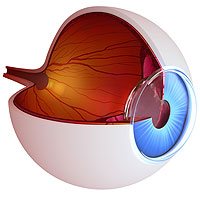
The lens which is responsible for focusing an image after it enters the eye, is normally crystal clear. When light enters the eye, it passes through the lens and is focused on the retina at the back of the eye. The retina then transmits the focused image to the brain.

top

What is a Cataract?

A cataract is the clouding of the eye's lens. The cloudy lens blocks the passage of light through the eye. As a result, the image that reaches the retina and is sent to the brain is cloudy and vision is poor.

What causes Cataracts?

A cataract is caused by a change in the chemical composition of the lens. The most common cause for this change is the natural aging process. As we mature, the normally flexible, clear material of the lens becomes hard and cloudy. Unfortunately, there is no way to prevent the development of cataracts. Everyone who lives long enough will eventually develop the problem.

top

Although most commonly seen in adults after the age of 40, cataracts can occur at any age. The condition may be present at birth or caused by an injury to the eye. Infections and other eye diseases, such as glaucoma and eye tumors, may cause the development of a cataract. Vision loss is usually gradual as a cataract develops.

What are the symptoms of Cataracts?

  • Dimming or blurring of vision
  • Halos or glare around lights
  • Double vision
  • Colors appear less brilliant
  • Feeling of "film" over the eyes
  • Frequent changing or cleaning of glasses
  • Difficulty driving or reading

How are Cataracts diagnosed?

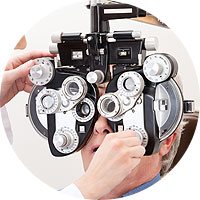
A cataract usually cannot be viewed from outside the eye and must be diagnosed during an eye examination. A variety of instruments, including an ophthalmoscope and a slit lamp are used to determine the type, size and location of the cataract. These instruments illuminate and magnify the structures of the eye.

If a cataract is diagnosed, several other tests are performed. Contrast sensitivity or glare testing may be used to determine the degree of interference the cataract is causing with vision. The A-scan and IOL Master are tests which are performed to determine the length of the eye and the power of the lens implant. Potential acuity measurement (PAM) could be used to determine how much vision might be improved. Other tests, like an endothelial cell count, may also be used depending on individual circumstances.

top

How are Cataracts treated?

Unfortunately, a cataract cannot be cleared by medication, eye drops or a change in diet. The only way to restore clear vision is to have the cloudy cataract lens surgically removed, a replacement lens must be used to see clearly. This artificial lens can be in the form of cataract glasses, contact lenses, or an intraocular lens implant (IOL). The most effective replacement lens used today is the IOL. It gives the patient a permanent focusing device for the eye which requires no care after surgical healing is completed.

When should Cataract surgery be performed?

Development of the cataract itself is not an indication that immediate surgery is required. A cataract should be removed when loss of vision begins to interfere with daily activities.

Outpatient Surgery:

Before surgery, patients are given medication to help them relax, and anesthetic eye drops to numb the eye and keep them comfortable during surgery. Most patients return home a few hours after the procedure with little or no need for pain medication.

top

What results can be expected after cataract surgery?

Patients can expect a rapid return to good vision following cataract surgery. Today's modern surgical techniques and technology have made cataract surgery one of the most successful surgical procedures performed in the United States with over 95% of patients reporting a return to good vision following cataract surgery. However, some patients will need to wear glasses for reading and other activities following the procedure.

Since general anesthesia is normally not required, most patients experience a rapid recovery, returning home within hours. The eye will take several weeks to heal completely. However, most patients are able to return to their normal activities the day after surgery. Returning to an active lifestyle is one of the primary benefits of cataract surgery.

Although there is no way to prevent the development of cataracts, loss of sight from the disease is largely preventable. With modern technology, cataracts can be removed and good vision restored. Cataract surgery can be performed when a loss of vision begins interfering with daily activities.

If you are experiencing the symptoms of cataracts or other vision problems, you should obtain a complete eye examination.

top

No-Shot, No-Stitch, No-Patch Cataract Surgery

Eye Care Specialists offers many services to help sufferers of cataracts. One of the most popular techniques used to restore vision loss due to cataracts is no-shot, no-stitch, no-patch cataract surgery. With this method, ultrasound technology is used to remove the cataract, and an intraocular lens is implanted through a smaller incision than is required in traditional cataract surgery. The cloudy lens can be removed through an incision as small as 1/8 of an inch wide! In cases where the surgeon can use a technique that does not require sutures, the natural pressure inside the eye is used to keep the incision closed while the eye heals. Eye Care Specialists is proud to offer its cataract patients the AcrySof Acrylic Foldable Intraocular Lens along with a large selection of additional high quality IOLs. The AcrySof lens is the first silicone-free, foldable acrylic IOL available today and is more flexible than previous lenses.

Most patients experience a rapid return to good vision following no stitch/small incision cataract surgery. In many cases, patients are able to see relatively well without glasses for distance the day following surgery. Fast healing and a quick return to an active lifestyle is one of the popular appeals of no stitch/small incision cataract surgery. For more information on this procedure, please e-mail Eye Care Specialists or call our office nearest you.

top

YAG Laser Treatment

The YAG laser is primarily used for treating unwanted cloudy membranes within the eye. These often develop at some point after cataract surgery and can be easily treated with the laser. The YAG laser is a controlled light ray that can be precisely focused on unwanted tissues in the eye. The YAG laser can easily make a crystal clear opening in these membranes, allowing unimpeded light to pass through, thereby restoring clear vision. YAG laser recovery is relatively quick and done on an outpatient basis. Please call Eye Care Specialists for more information on how YAG Laser Treatment may be able to help you see clearer!

LIFESTYLE IMPLANTS

GREAT NEWS FOR CATARACT PATIENTS

MULTI FOCAL LENS IMPLANTS

AcrySof® ReSTOR® IOL

ReZoom™ IOL

Finally, the opportunity for freedom from reading glasses and bifocals.

Until recently, life without reading glasses or bifocals was not an option for most cataract patients. You now have an option. The AcrySof® ReSTOR® IOL Intraocular lens (IOL), which is an artificial lens that is implanted in the eye to replace the eye's clouded crystalline lens during cataract surgery, is a unique technological innovation that can provide you with quality vision throughout the entire visual spectrum - near through distance - with increased independence from reading glasses or bifocals!

For most cataract patients, life without reading glasses or bifocals is something they either experienced before presbyopia (an age-related, gradual loss of flexibility within the lens of the eye usually around the age of 40 which creates the need to wear reading glasses) or they just dreamed about for most of their lives. But today, the AcrySof® ReSTOR® IOL is turning those dreams into reality with its revolutionary lens technology, which is designed to allow patients to see clearly at many distances without bifocals or reading glasses.

The AcrySof® ReSTOR® IOL is now available and delivers a high level of glasses-free vision for cataract patients.

In the clinical study, 80% of patients receiving the AcrySof® ReSTOR® IOL reported that they never wear glasses for any activities. With the AcrySof® ReSTOR® IOL they can read a book, work on the computer, and drive a car - day or night - and play golf or tennis with an increased freedom from glasses. In fact, patients were so pleased with their vision, nearly 94% of patients said they would have the AcrySof® ReSTOR® IOL implanted again, if given the choice.

Eye Care Specialists and Dr. Harvey Reiser were selected as one of only 16 surgeons and sites in the United States to participate in the Clinical Research leading to the FDA Approval of the AcrySof® ReSTOR® IOL. Eye Care Specialists is one of the leading Ophthalmology Practices on the East Coast implanting the AcrySof® ReSTOR® IOL . See our press release in the What's New Section.

top

How does the AcrySof® ReSTOR® IOL work?

As we perform daily activities such as reading, watching television or working at the computer, our eyes are constantly focusing on objects at varying distances - up close, far away and everything in-between. The ability to quickly change focus throughout this range of vision is called accommodation. Accommodation is the ability of the eye's lens to change shape to focus on objects at various distances. Unfortunately, this ability diminishes as we grow older, causing us to become dependent on bifocals or reading glasses. However, the AcrySof® ReSTOR® IOL was designed to provide quality near to distance vision by combining the strengths of apodized diffractive and refractive technologies. Similar technology has been used for years in microscopes and telescopes to improve image quality, and has now been patented for use in intraocular lenses by Alcon.

top

Apodized Diffractive

Apodization is the gradual tapering of the diffractive steps from the center to the outside edge of a lens to create a smooth transition of light between the distance, intermediate and near focal points. Diffraction involves the bending or spreading of light to multiple focal points as it passes through the lens. On the AcrySof® ReSTOR® IOL, the center of the lens surface consists of an apodized diffractive optic. This means that the series of tiny steps in that center area work together to focus light for near through distance vision. (Distance vision: Refers to focal points that are typically 7 feet or further from your eyes. Items that typically fall within the distance range of vision are billboards, street signs, and movie screens).

Refractive

Refraction involves the redirection of light passing through the lens, to focus on the Retina. The refractive region of the AcrySof® ReSTOR® IOL bends light as it passes through the lens to a focal point on the retina. This outer ring of the AcrySof® ReSTOR® IOL surrounds the apodized diffractive region and is dedicated to focusing light for distance vision.

top

The Procedure:

Cataract surgery is performed on an outpatient basis, and usually requires just a few hours of your time from start to finish. Your eye will be treated with anesthetic prior to the procedure so you'll feel little, if any, discomfort. First, a tiny incision will be made in the eye allowing your surgeon to use a small instrument (about the size of a pen tip) to break up or wash away the cloudy cataract. Once the cataract is removed, the AcrySof® ReSTOR® IOL will be inserted through the same tiny incision and set into its permanent position.

After the Procedure:

After the procedure you'll rest for a short while before you go home. Your doctor will typically examine your eye within 24 hours. You'll need to use prescription eye drops to guard against infection and help your eye heal. For a few days, you may need to wear a protective shield, especially at night to prevent you from rubbing your eye. Everyone heals somewhat differently, but most patients see well enough to return to most of their routine activities the day after surgery. Once both eyes have been treated, you will fully appreciate the AcrySof® ReSTOR® IOL and realize that your cataract was one thing you could definitely live without.

top

Clinical Results

Finally, quality vision and true freedom from glasses for 80% of patients

AcrySof® ReSTOR®/Monofocal Overall Spectacle Wear During the AcrySof® ReSTOR® IOL clinical studies, patients experienced lifestyle enhancement through quality vision, and greater freedom from reading glasses and bifocals. In fact, according to the AcrySof® ReSTOR® clinical studies, four out of five patients with the AcrySof® ReSTOR® IOL reported never wearing glasses following cataract surgery in both eyes, compared to only 1 out of 10 patients with monofocal lenses. This is the highest level of freedom from glasses ever demonstrated in an IOL clinical trial.

Additionally, the AcrySof® ReSTOR® clinical studies indicated that nearly 94% of the study subjects were so satisfied with their new quality vision that they would have the AcrySof® ReSTOR® IOL implanted again.

top

ReZoom™

ReZoom™ intraocular lens is a second-generation refractive multifocal IOL that provides cataract patients with greater independence from glasses than monofocal IOLs. The ReZoom™ proprietary multifocal design provides a range of vision that monofocals cannot match.

The ReZoom™ Balanced View Optics™ technology distributes light over five optic zones so that each lens has a distance-dominant central zone for distance vision in bright light conditions when the pupil is constricted.

Clinical Studies show that 92% of those receiving the ReZoom Lens "never" or "only occasionally" need to wear glasses after their surgery.

top

FULL RANGE OF VISION AND GREATER FREEDOM FROM GLASSES

Unlike conventional single-vision (monofocal) lens implants, state-of-the-art ReZoom™ lenses have been specially designed with multifocal zones that provide good vision across the spectrum of varying distances and light conditions. So you can see well anywhere and anytime, be it near, far or in between. Patients no longer have to settle for monofocal lenses that only provide good distance vision with limited ability to see objects that are near without glasses.

The ReZoom™ Multifocal Lens is a clear, foldable implant made of a high-refractive-index acrylic material. This new technology multifocal lens is designed to provide a full range of vision - near, distance and intermediate - after cataract treatment.

HOW TO KNOW IF THE REZOOM™ MULTIFOCAL LENS IS RIGHT FOR YOU

If you are diagnosed with cataracts and are experiencing one or more of the following symptoms, you may be a candidate for the ReZoom™ Multifocal Lens:

  • Difficulty reading
  • Difficulty seeing close objects
  • Difficulty seeing to drive, especially at night
  • Changing glasses prescriptions
  • Needing bifocals

    top

The Procedure

The ReZoom™ Multifocal Lens procedure is an advanced treatment for cataracts that helps most people see near, far and everything in between without depending on glasses all the time.

Today, cataract removal is generally performed as an outpatient procedure under local or topical anesthesia. You will be fully awake, but you will be comfortable and feel no pain. Typically, you will be asked to arrive an hour or so prior to your procedure, and you will be allowed to leave after a period of observation following your procedure. The procedure usually takes 10 to 20 minutes.

To remove your cataract (clouded lens), your doctor will use a technique called phacoemulsification (phaco). Your doctor will make a tiny, 1/8-inch incision and insert a small phaco probe. The probe will break apart the clouded lens and remove it. Next, an IOL will be inserted through the same tiny incision, into the lens capsule of your eye. Because this procedure is performed through an incision that is very small, your eye will be able to heal rapidly with little or no discomfort.

Following the procedure, you will be allowed to return home within an hour or so. Vision is restored immediately in most cases; however, vision usually continues to improve in the weeks following the procedure. Keep in mind that lens implants have been in use for about 40 years to treat cataracts. Over 14.2 million cataract and lens implant procedures are now performed each year worldwide.

top

Astigmatism Treatment

Astigmatism

Astigmatic Keratotomy (AK) and Limbal Relaxing Incision (LRI) are the procedures that treat astigmatism. Surgeons make microscopic incisions in the cornea. These incisions are made in the steepest part of the cornea, allowing it to relax and become more round. AK and LRI are often performed in combination with other refractive procedures and cataract surgery because astigmatism frequently accompanies nearsightedness or farsightedness. If you have significant astigmatism, your vision is somewhat blurry all the time.

AK or LRI combined with cataract surgery can improve a patient's chances of excellent uncorrected postoperative vision. Patients with more than a diopter of topographical astigmatism should be considered for AK or LRI at the time of their cataract surgery to improve the quality of their vision. Use of AK or LRI becomes more important when using multifocal intraocular lenses (IOLs) because good simultaneous uncorrected distance and near vision can be obtained only with a nearly spherical cornea.

top

How does it work?

Astigmatism occurs when the cornea is curved unevenly. Often there is more curvature in one direction than in the other. With astigmatism, light rays that normally focus in one point on the retina (light-sensitive tissue at the back of the eye) have no single point of focus. This causes images to appear blurry and distorted.

During AK and LRI the surgeon usually makes two microscopic incisions in the cornea. These allow the cornea to flatten and become more evenly rounded. Then light rays focus more normally inside the eye, so your vision is clearer.

What Happens During Astigmatic Keratotomy or Limbal Relaxing Eye Surgery?

These eye surgerys are done under a local anesthesia and the entire procedure lasts a maximum of 10 minutes for both eyes. It involves making one or two incisions at the steepest part of the cornea. This causes the cornea's football-shape, which is causing the astigmatism, to relax into a rounded shape.

top

What Should I Expect After Astigmatic Keratotomy Eye Surgery?

Your eye may be sensitive to light for a few hours or feel like there is a foreign object in it. Your doctor will prescribe eye drops for you that will help prevent infection and inflammation, and reduce the feeling that you have a foreign object in your eye.

While a reduction in the astigmatism is often observable by the day after surgery, it generally takes a few weeks before the results stabilize. In cases of severe astigmatism - which can be reduced by astigmatic keratotomy eye surgery but not eliminated -- new eyeglasses will be prescribed a month after surgery.

Toric IOLs for Astigmatism

Toric IOLs are designed to correct astigmatism. This provides another new option for Cataract Patients! The ACRYSOF® Toric IOLs are artificial lenses implanted in the eye to restore vision after a clouded natural lens (cataract) is removed. The unique design of the AcrySof® Toric Lens makes it possible to reduce or eliminate corneal astigmatism and significantly improve uncorrected distance vision .

The lens of the IOL is convex on both sides (biconvex) and made of a soft plastic that can be folded prior to insertion, allowing placement through an incision smaller than the optic diameter of the lens. After surgical insertion into the eye, the lens gently unfolds to restore vision. The supporting arms (haptics) provide for proper positioning of the IOL within the eye.

Most surgeons who treat astigmatism in their cataract patients tend to use astigmatic keratotomy (AK) or limbal relaxing incisions (LRI) which involves making incisions in the cornea.

The ACRYSOF® Toric IOLs can also be used in adult patients with corneal astigmatism during cataract removal. The ACRYSOF Toric IOLs have been shown in a clinical study to provide good uncorrected distance in patients who have undergone cataract surgery and required reduction of corneal astigmatism.

The FDA approved the AcrySof Toric IOL by Alcon in September 2005.

top